top

Michigan Posting Signs & Treatment Information

Aquatic Herbicides: What Lake and Pond Residents Should Know

Why You’re Seeing This Notice:

If this lake or pond has recently been treated, this page is here to help explain why treatment was performed, what it means for residents, and where to find additional information.

If you live on the water, you already know how quickly aquatic plants and algae can grow once things warm up. A little plant growth is part of a healthy lake. Too much of it, though, can cause problems in a hurry.

Excessive vegetation and algae can interfere with swimming, boating, and fishing. It can also affect water quality, fish habitat, and the overall enjoyment of the lake. That is why aquatic vegetation management is sometimes needed.
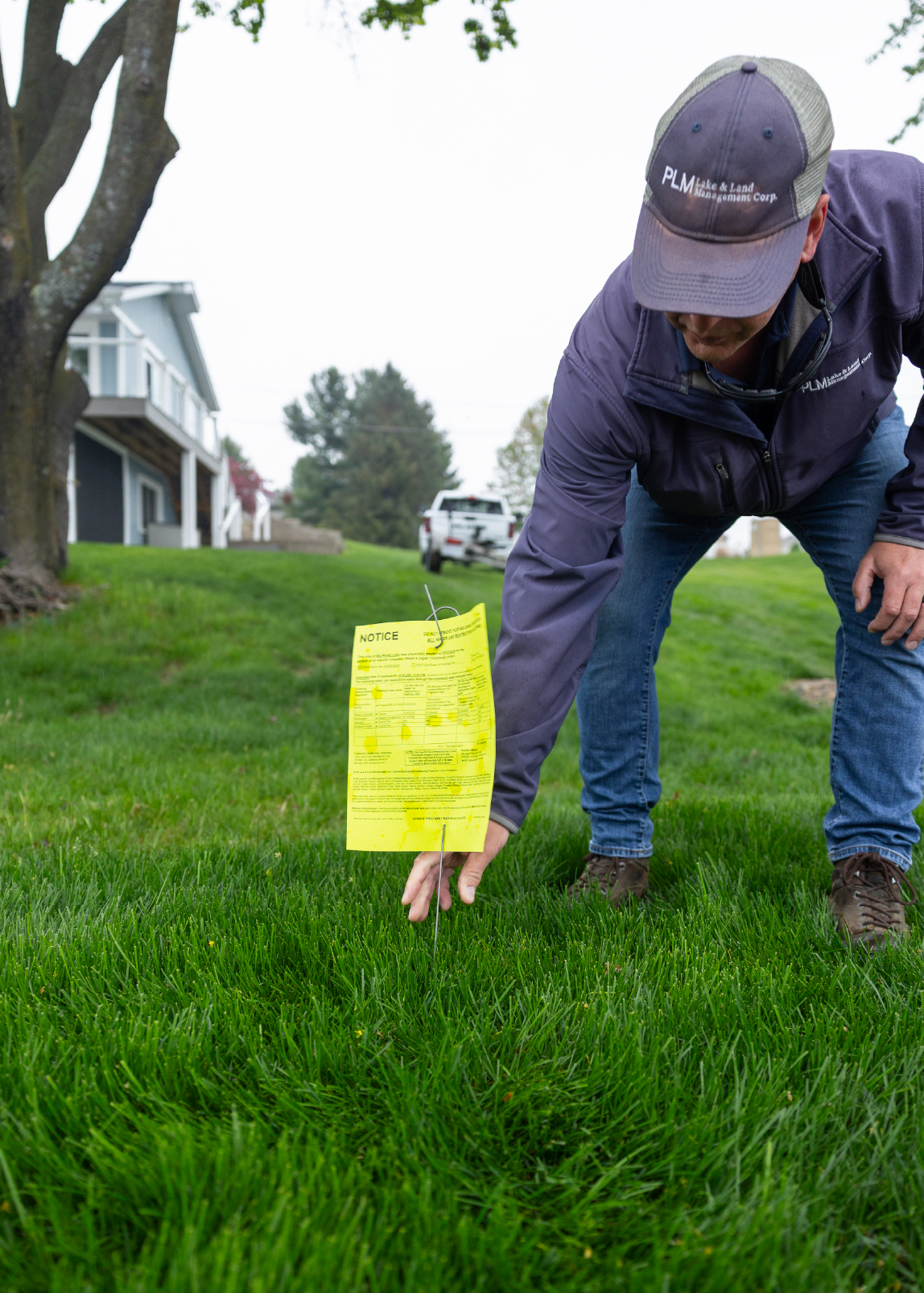
Man in a PLM jacket and cap placing a yellow notice sign into green grass near a residential area with a pickup truck in the background.
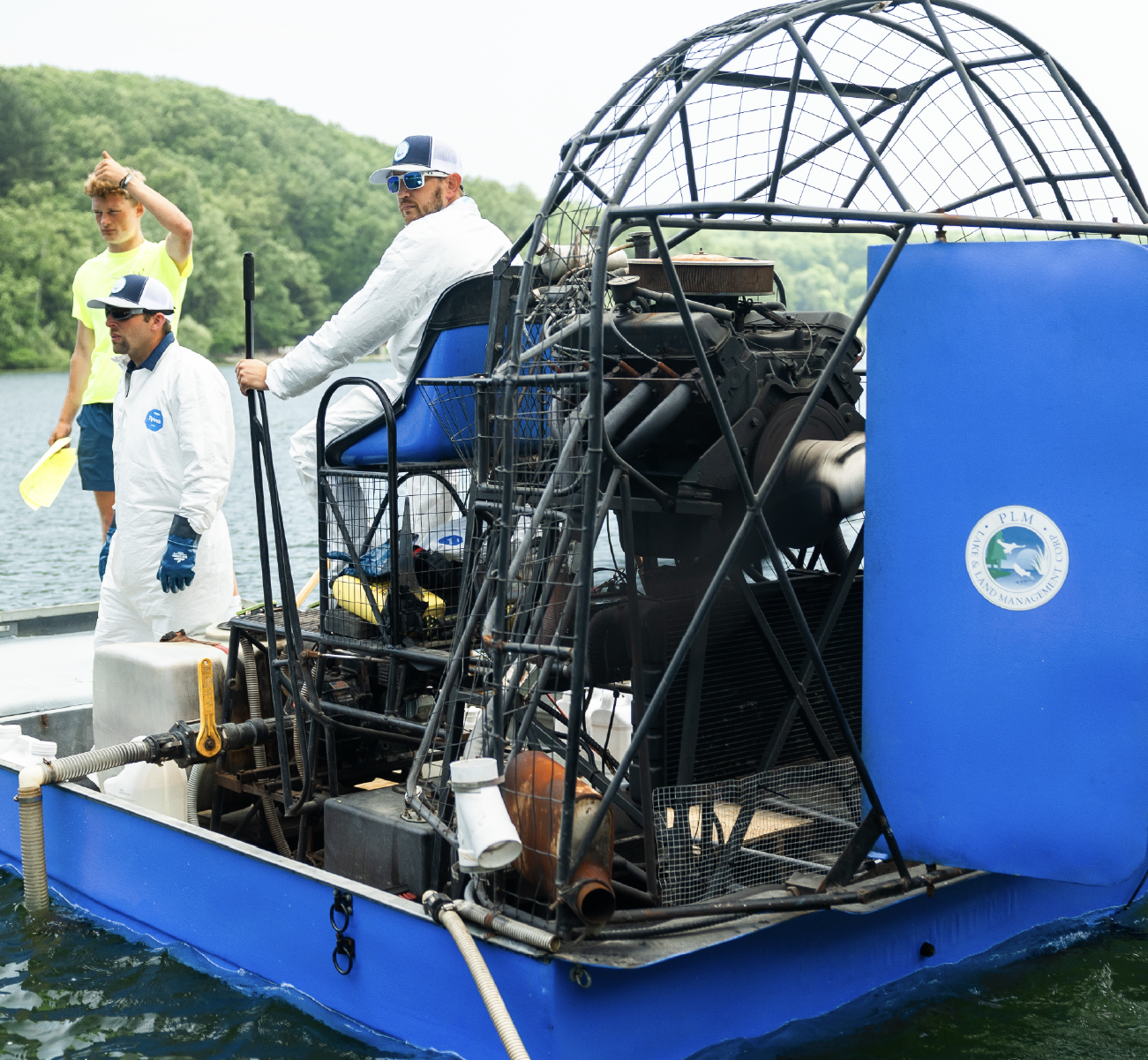
Three men on a blue airboat on a lake, two wearing white protective suits and one in a yellow shirt, with green trees in the background.

Why Aquatic Herbicides Are Used

Aquatic herbicides and algaecides are tools used to manage excessive or invasive plant and algae growth. They help bring a lake or pond back into balance when vegetation starts causing ecological or recreational issues.

The goal is not to eliminate all plant life. Healthy lakes need aquatic vegetation. Treatment plans are designed to reduce nuisance growth while preserving beneficial plants that support fish and wildlife habitat. That balance matters, and frankly, it is what good lake management is all about.

How These Products Are Regulated

Aquatic herbicides do not get applied without oversight. These products are regulated at both the federal and state level and must go through extensive testing before they can be approved for use.

Applications are made by trained, certified professionals who follow strict product label directions and permit requirements. Treatments are planned around the waterbody’s needs, the target plant species, and the intended use of the lake or pond.

What Residents Should Know About Exposure

One of the most important things to understand is that impact depends on both the product used and the level of exposure.

Aquatic herbicides are typically applied at very low concentrations and become diluted in the water. Many also break down naturally over time through sunlight, water chemistry, and biological activity. In other words, these treatments are measured, targeted, and designed to be used according to established guidelines.

Why Posting Signs Matter

After treatment, you may notice posting signs around the lake or pond. These signs are there to provide clear guidance for residents and visitors.

Depending on the product used, there may be temporary water use restrictions or recommendations for activities like irrigation, swimming, fishing, or using water for pets or livestock. These postings are tied to the treatment and are meant to ensure the product is used exactly as intended.

If you see a sign, it is always best to read it fully and follow the guidance listed.

A Balanced Approach to Lake Management

Managing a lake or pond is a shared responsibility. Treatment is just one part of the bigger picture.

Thoughtful aquatic plant management, paired with good shoreline practices and long-term stewardship, helps protect water quality and keeps the lake enjoyable for everyone. Whether you are trying to cast a line off the dock, take the kids swimming, or just enjoy a clean stretch of shoreline, a sound management plan helps keep the water working the way it should.
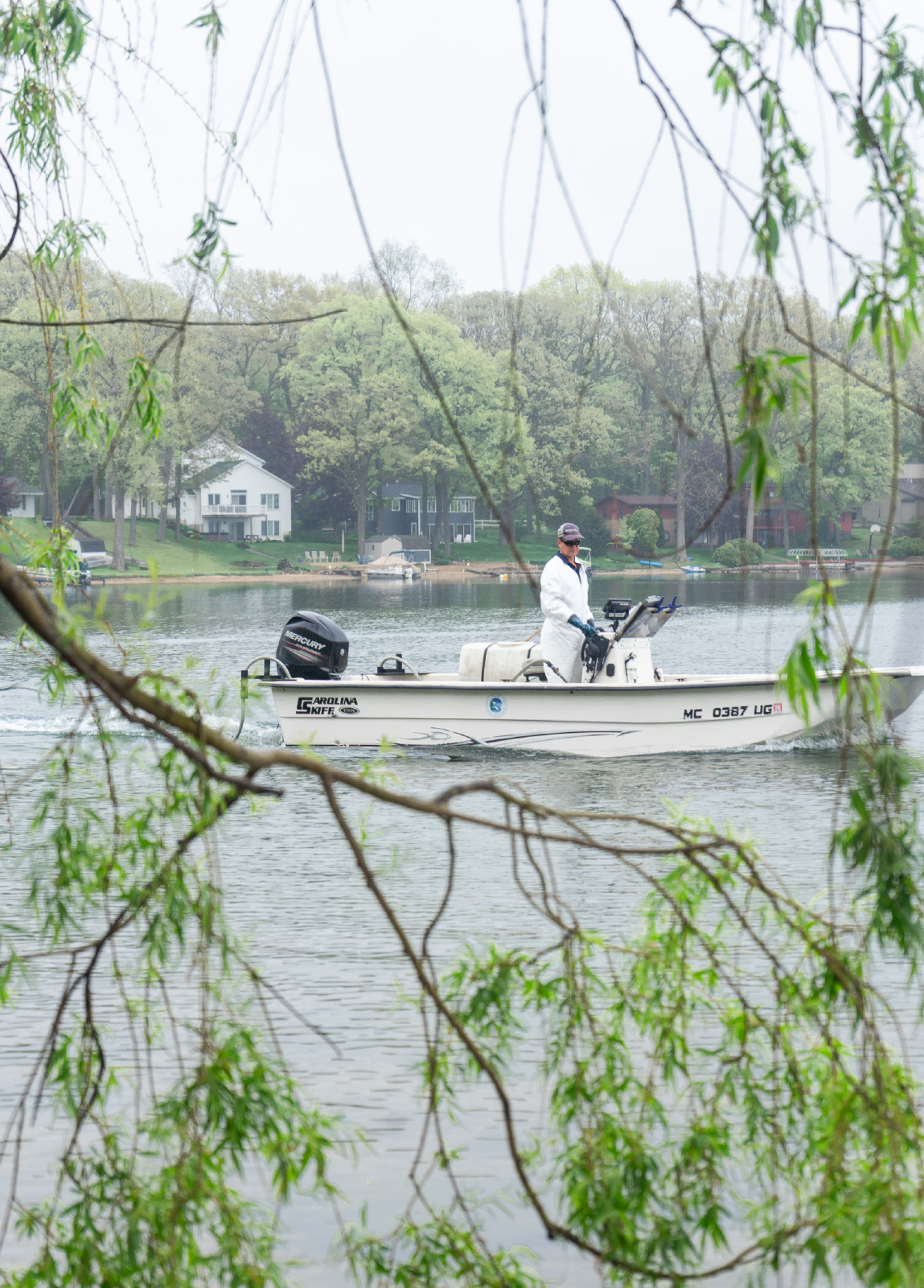
Person wearing white protective gear piloting a motorboat on a lake near tree-lined shore with houses.
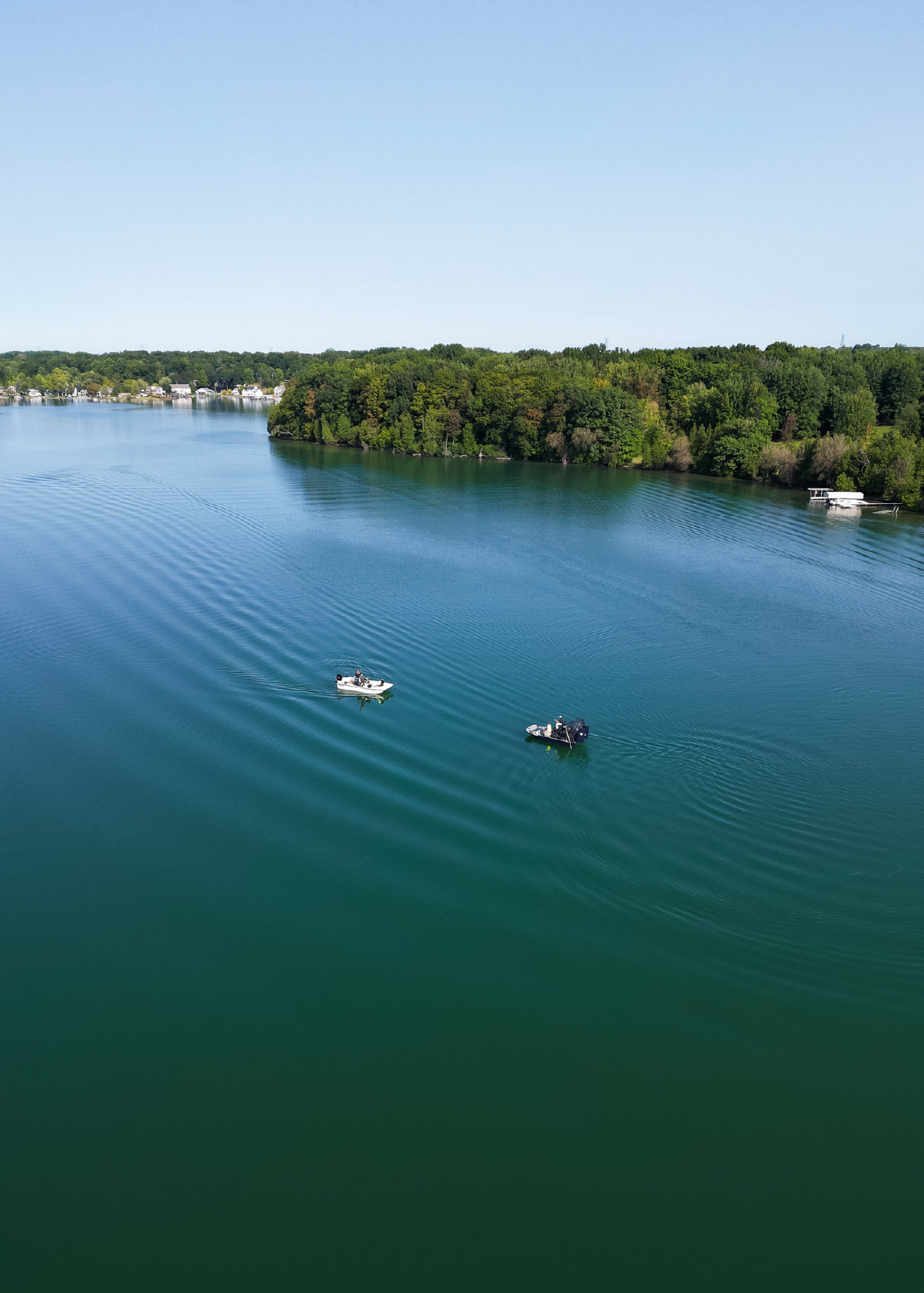
Two small boats on a calm lake with green forested shoreline under a clear blue sky.

Helpful Documents for Lake Residents

Treatment Posting Sign Example

Sample posting sign showing treatment details, products, and temporary water use restrictions.
View PDF

Risk / Benefit Statement

Why aquatic herbicides are used, how they are regulated, and how risk depends on dose and exposure.
View PDF

Aquatic Plant Management Q&A

Answers common questions on swimming, irrigation, pets, fish, algae, and plant management.
View  PDF

Common Questions about Aquatic Plant Management

Will aquatic plant control eliminate all aquatic vegetation?
NO! Nearly all available aquatic plants controls are SELECTIVE (i.e., they control some plants but not others). Intelligent aquatic plant management uses this selectivity to remove particularly problematic plants while leaving others unaffected. This approach minimizes interference with recreation while leaving desirable vegetation that provides BENEFITS to the lake (see below).
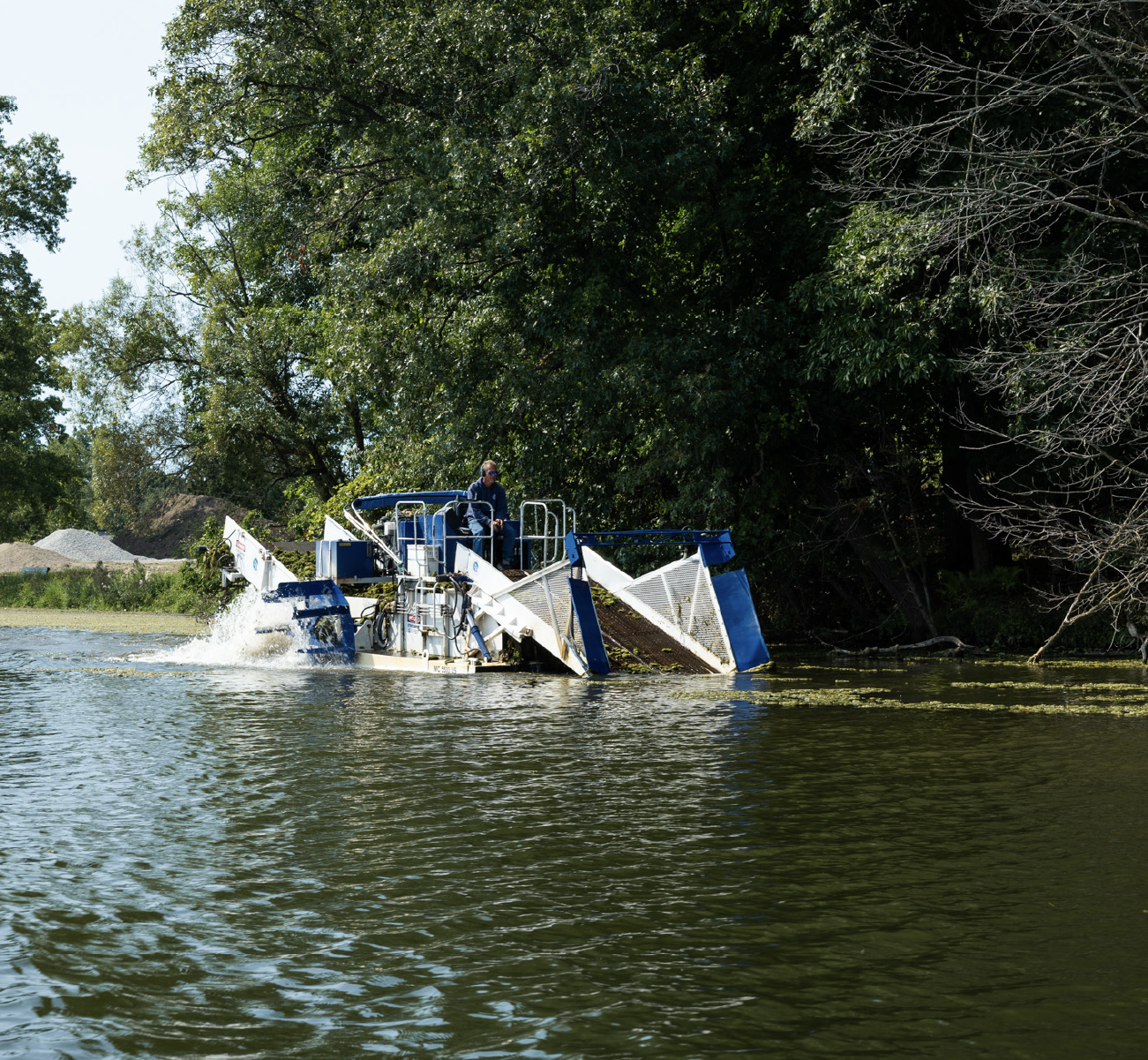
Harvesting cuts all plants in the affected area, but plants are not killed and will regrow. Intelligent aquatic plant management removes the most problematic aquatic plants, which are typically exotic species, while preserving desirable native vegetation.
Can we get rid of ALL the weeds in our lake?
NO. And even if you could, you shouldn’t. Trying to keep a lake that has good growing conditions free of plant growth would be like trying to keep all plant life from growing in your front lawn — it just doesn’t make sense! …unless you pave it. (And if that’s what you want, build a swimming pool.) Aquatic plants are an important component of the lake ecosystem. They provide many benefits, including stabilizing sediments, oxygenating the water, providing habitat for fish and invertebrates…
Can we swim after a weed treatment?
NO. There is a 24 hour swimming restriction within 100 feet of any treatment area of the lake.
Actually, all of the herbicides that we use do not have a swimming restriction on the product label.
However, the EGLE does not want you in the water during treatment for your safety and ours. If you
see a boat spraying, please exit the lake, we come in close to shore! Treatment notices will be posted on the day of treatment along the shoreline of all treated areas. Therefore, if your area does not have a notice (sign in yard) then you do not have a swimming restriction. Also, offshore areas of the lake (deeper water) will be safe for swimming and boating.
Can we irrigate our lawn and flowers after a weed treatment?
YES AND NO. Several of the herbicides that will be applied to the water do have turf and ornamental flower irrigation restrictions. The restrictions can range from 3 days to 14 days. If you pull water from the lake to irrigate, please read posted sign carefully to determine your irrigation restriction for that treatment.
Will my dog get sick if he drinks the treated water?
NO. A dog would have to drink several thousand gallons of treated water to observe any noticeable effect. However, we do not want your dog in the water during or right after a treatment. Some of the herbicides we use become inactive if the sediment is stirred up in the water column. Therefore, keep the pets out of the lake for 24 hours!
Are the fish still safe to eat?
YES! There are no fishing restrictions with any of our herbicide treatments. The herbicides used do not accumulate in the fish. They are safe to eat… ENJOY!
We don’t want to use CHEMICALS in our lake… isn’t harvesting a more environmentally responsible aquatic plant control technique?
Not necessarily. The most environmentally responsible control technique depends on the goals of the management program and the type(s) of plants to be controlled. In some cases, harvesting is the best choice. In other cases, harvesting can exacerbate aquatic plant problems. For example, we would not recommend harvesting a lake with an uncontrolled Eurasian watermilfoil population because harvesting will speed the spread of this aggressive exotic plant and hasten the replacement of native plants.
Our lake has been receiving algae treatments, but the water is still green… why haven’t the treatments made it clear?
In lakes, algae treatments are usually intended to remove filamentous algae (i.e., mats of threadlike algae that grow on the bottom or floating at the surface). Algae treatments to lakes do not control planktonic algae (i.e., the microscopic algae that are too small to see and give the water an overall green color). Planktonic algae control would require treating the entire lake, which is rarely feasible in larger bodies of water (it often is feasible in ponds). Controlling planktonic algae problems in lakes usually requires controlling the sources of nutrients that fertilize their growth.
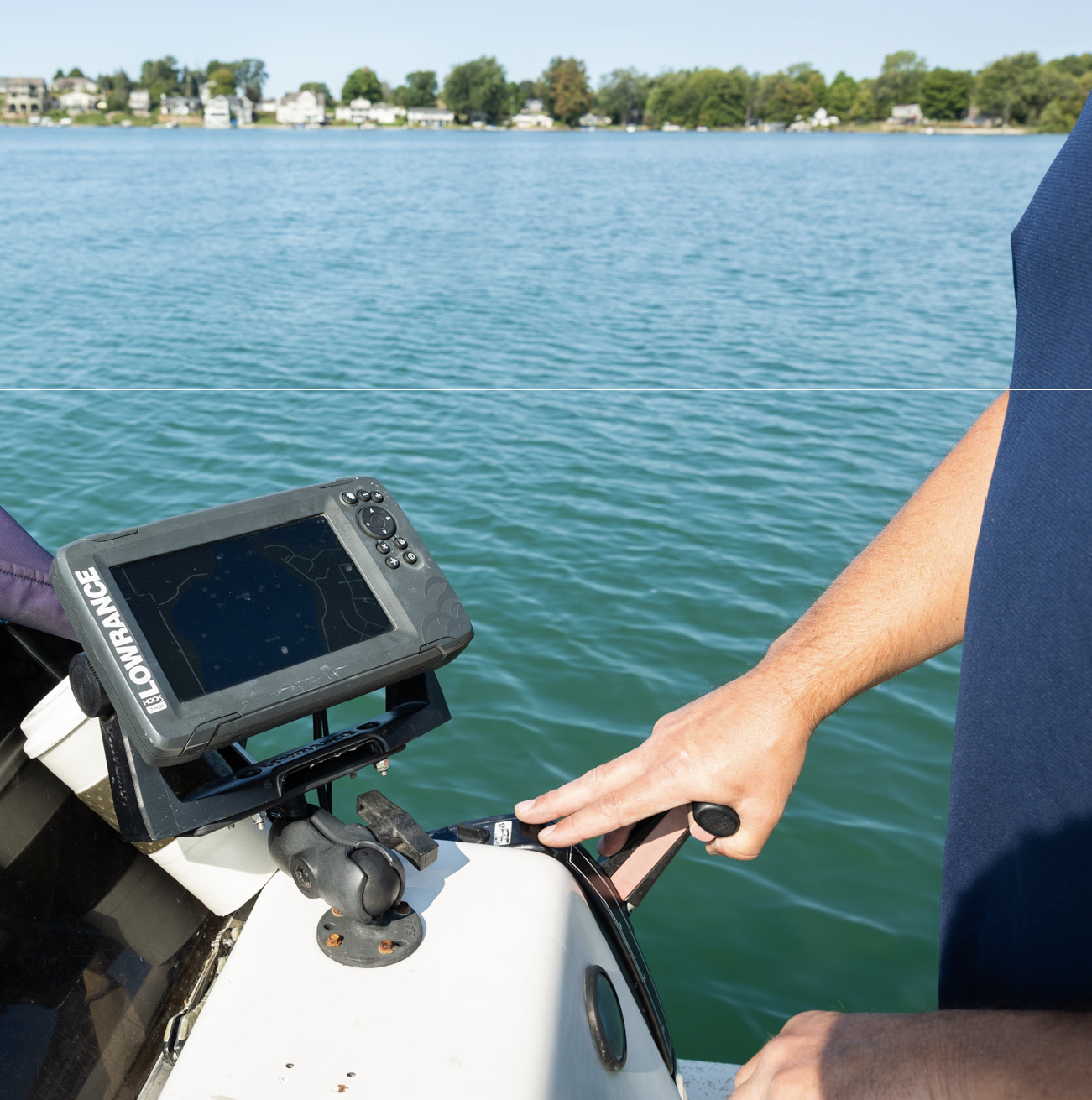
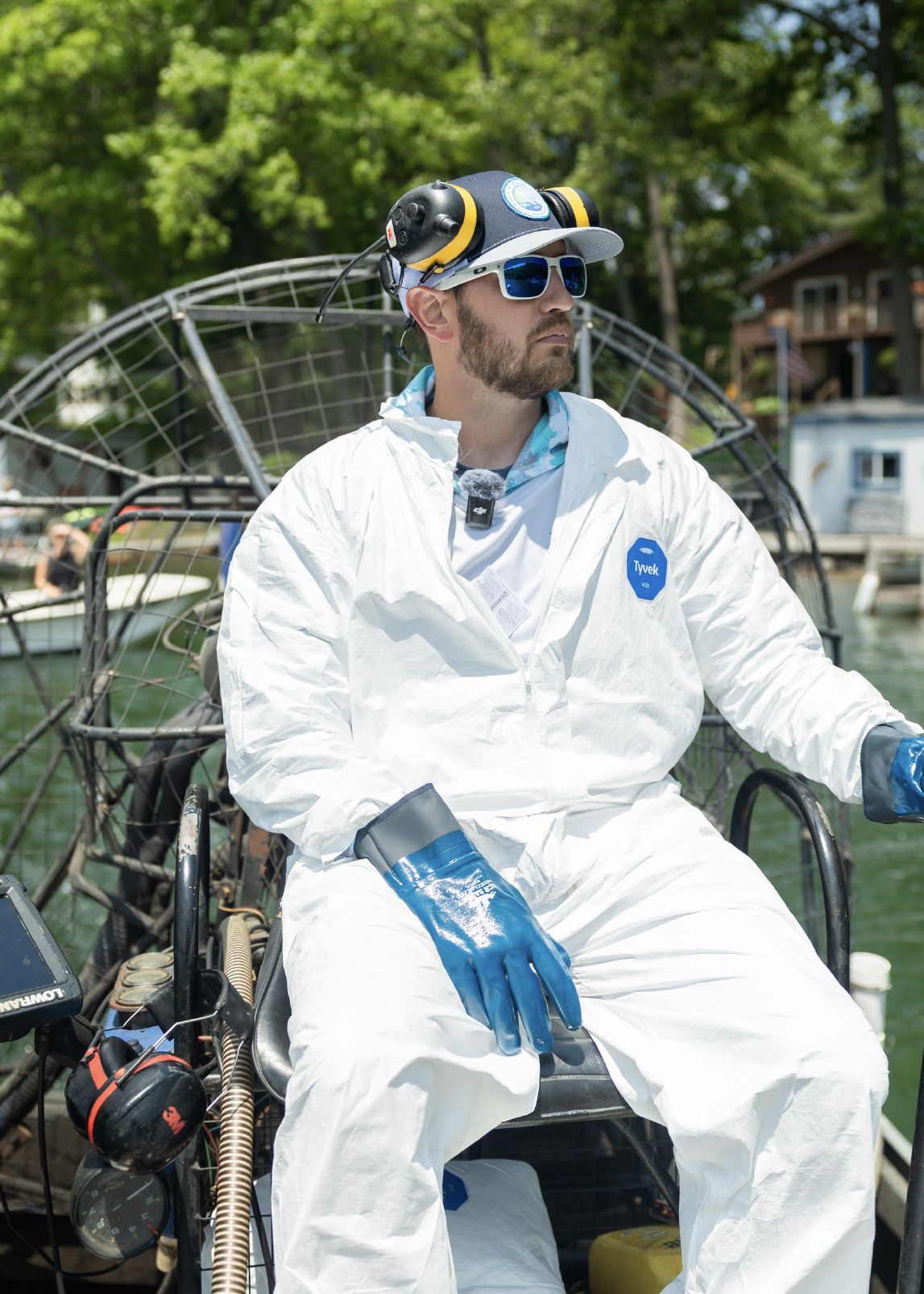
Person operating boat throttle next to a mounted Lowrance fish finder screen on a lake.Man wearing white protective Tyvek suit, blue gloves, and a hat with earmuffs, sitting on an airboat near water with trees and houses in the background.
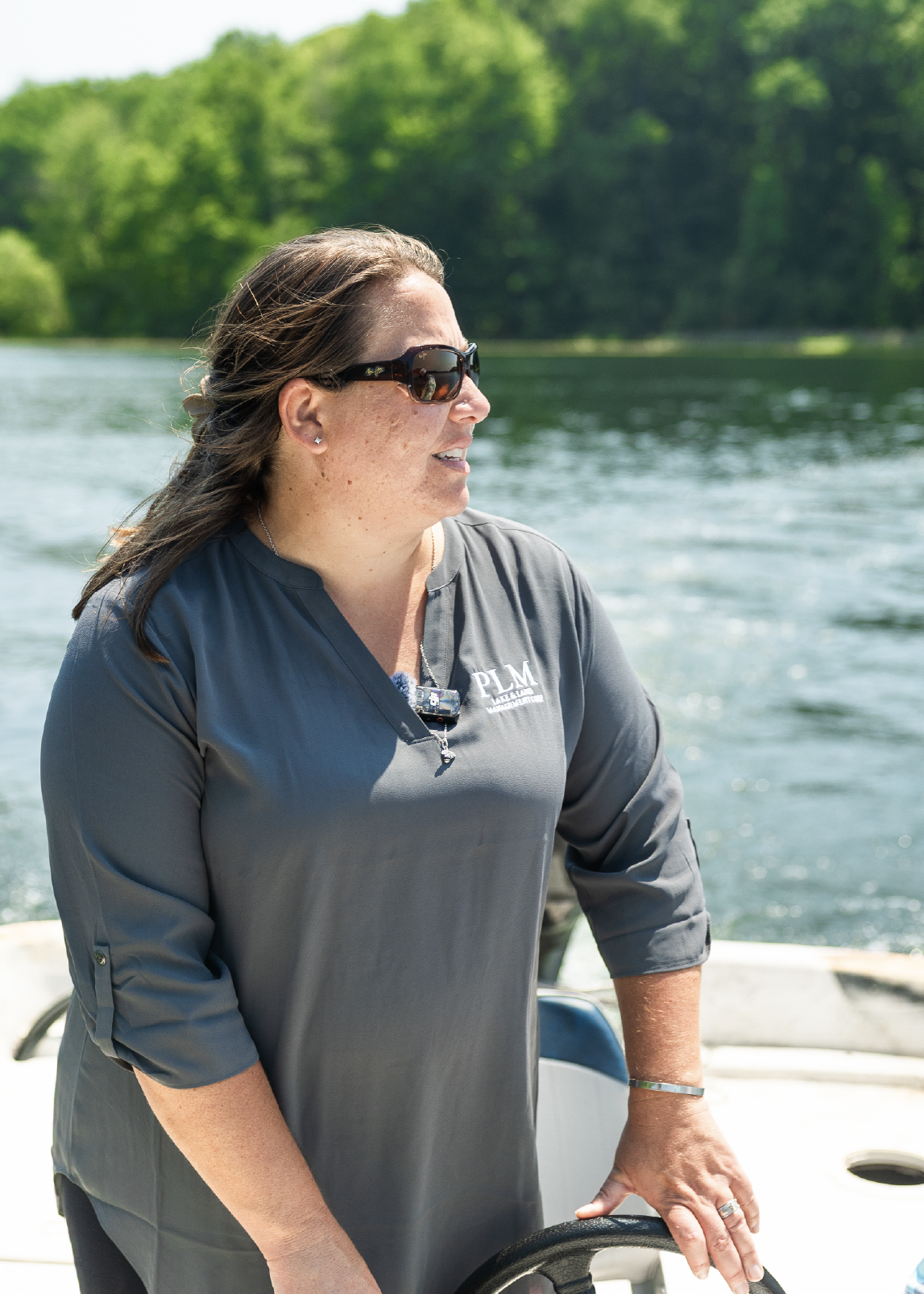
Three men on a blue airboat on a lake surrounded by forest, two men in white protective suits and one holding a yellow paddle.Woman wearing sunglasses and a PLM shirt steering a boat on a lake with green trees in the background.Man operating a blue and white aquatic weed harvester on a lake surrounded by trees.

Questions?

If you have questions about a recent treatment, posting sign, or water use guidance, please contact PLM. Our team can help explain the treatment approach, the products used, and any temporary restrictions associated with the application.
Contact Us

Search for something